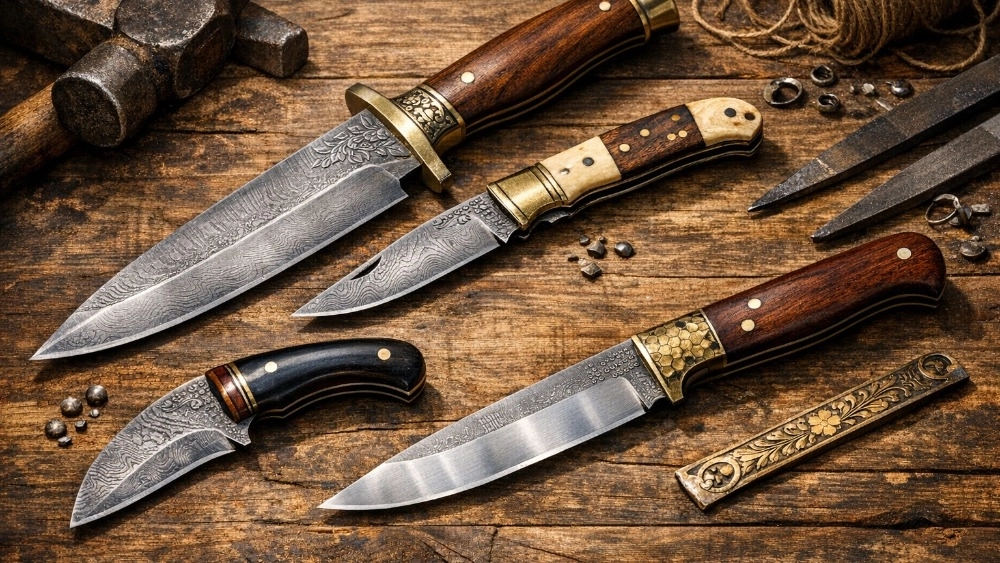
The knife making industry in Iran, especially in Zanjan, has deep roots in the history of handicrafts. بسیاری از استادکاران این شهر با تکیه بر مهارتهای نسلبهنسل منتقلشده، آثاری خلق میکنند که نهتنها کاربردیاند، بلکه ارزش هنری بالایی هم دارند. Meanwhile, Nazari Workshop and the prestigious brand Nazari Zanjan Knife is one of the most well-known names in the field of handmade knife production; A brand that offers quality, originality, design and durability together.
This article fully examines the production process, the difference between wholesale and individual sales, technical and artistic features, and the role of this workshop in the sustainability of Zanjan knife making culture.
The position of Zanjan Nazari knife in the Iranian knife industry
Zanjan Nazari knife brand is the result of decades of experience, effort, innovation and love for art. استادکاران این مجموعه سالهاست که با ساخت چاقو دستساز در مدلهای مختلف به شهرت رسیدهاند. Knives made in this workshop have become very popular in the domestic market and even among foreign buyers.
The important feature of this brand is maintaining traditional quality along with modern designs. From blade making to handle wood selection, all steps are done with high precision. The result of this precision is products that provide beauty and utility at the same time.
The importance of producing handmade knives in theoretical workshop
The main difference between an industrial knife and a handmade knife is the spirit that is breathed into the product. An industrial knife is produced with the help of machines, but a handmade knife is the result of:
is.
In the theoretical workshop, each blade is the result of hours of continuous work. This is the reason why the brand Zanjan Nazari has gained a special place among professionals.
Major production in theoretical workshop
Mass production is an important part of the activities of this collection. Many craft stores, tourist centers, restaurants, collectors and sellers throughout the country use Zanjan Nazari knife products in bulk.
In bulk production:
- The design of the base model is determined
- The type of steel is determined
- The handles are made according to a fixed pattern
- The blades are heated and polished with the same precision
- Quality control is done in several stages
The important point is that quality does not decrease in mass production. Because making handmade knife can never be machine-made and low-quality. Even in high circulation, the standards of the theoretical workshop are observed exactly in accordance with the quality of single sales.
Single shop in Nazari workshop
One of the most attractive parts of the Zanjan Nazari knife brand is the possibility of individual purchase and complete customization. Customers looking for a special or collectible knife usually come to the theoretical workshop.
Advantages of single selling:
- Possibility of choosing a desired design
- Possibility of ordering engraving on the blade or handle
- Choosing the handle material
- Choosing the type of steel
- Choosing the blade model
- Access to special and limited models
Many of the single knives produced in this workshop are collectible and have a high artistic value.
The steps of making a handmade knife in the theoretical workshop
The manufacturing process in this workshop is a precise and multi-stage path, each part of which has a direct effect on the final quality. In the following, we review the main steps of making a handmade knife.
1. Choosing the right steel
Choosing the base metal is one of the most important stages of making a knife. The steels used in the theoretical workshop are selected depending on the type of application of the model. Suitable steels for:
- Kitchen knife
- Hunting knife
- Folding knife
- Slaughter knife
- Collection knife
Each of them has its own characteristics, and theoretical experts carefully select them.
2. Hammering and shaping the blade
This step is the heart of making a handmade knife. The piece of steel is heated and hammered into the initial shape of the blade. Here human experience and skill play the main role. Each hammer blow must be applied with the right intensity and angle to optimize the structure of the metal and its strength.
3. Heating and quenching
After shaping, the blade is heated and then cooled in a suitable environment. This process causes:
- Increasing hardness
- Preventing brittleness
- Increasing sharpness
Heating is one of the most sensitive stages of construction, and the experts of the theoretical workshop have optimized it experimentally and scientifically for years.
4. Grinding and edging
After hardening, the blade is placed on special stones and its edge is formed. The type of knife edge directly depends on the application; For example, a kitchen knife has a different edge than a hunting knife.
5. Make a batch
Handmade knife handle shows the identity and authenticity of the product. In the theoretical workshop, the categories are made from the following materials:
- Natural wood
- Bone
- Horn
- Resin
- Combination of wood and resin
Each handle is shaped and polished by hand to be both beautiful and ergonomic.
6. Polishing and final quality control
At this stage, the blade is polished and the handle is finished. Then the knife in terms of:
- Beauty
- Edge quality
- Balance
- Strength
- Handle and blade health
Fully checked. Each finished knife is the result of hours of precision, artistry and energy.
Zanjan Nari knife features
Knives of this brand have become popular and durable for several reasons:
- High durability
- Extraordinary blade durability
- Resistant structure
- Ergonomic design
- Variety of models
- Iranian authenticity
- Consistent quality in every production series
- Visual beauty and artistic value
These features make Zanjan Nazari knife a good choice not only for everyday use, but also for gifting and collection.
What are the uses of knives produced in theoretical workshop?
Different models of knives are made in this workshop for different needs, including:
- Kitchen knife
- Butcher and slaughter knife
- Hunting and camping knife
- Folding and pocket knife
- Collection knife
- Professional pencil sharpener
Each model is designed based on professional standards and according to customer needs.
The role of theoretical workshop in Zanjan knife making culture
Zanjan is a city known for knife making. Many tourists must visit the handicraft market and traditional workshops of this city.
Theoretical workshop is one of the workshops that is not only a producer, but also plays an important role in introducing and promoting this art. The possibility of observing the construction process is an interesting and informative experience for many enthusiasts.
summary
Handmade knife is an art; An art that has been kept alive in the theoretical workshop with care, skill and love. The Zanjan Nazari knife brand has been able to find a special place in the domestic and foreign markets with high-quality wholesale and retail production.
Whether you are looking for a bulk purchase or want a special and collectible product, the products of this workshop are a shining example of Iranian authenticity and art; Products that create a lasting effect from steel and wood.